
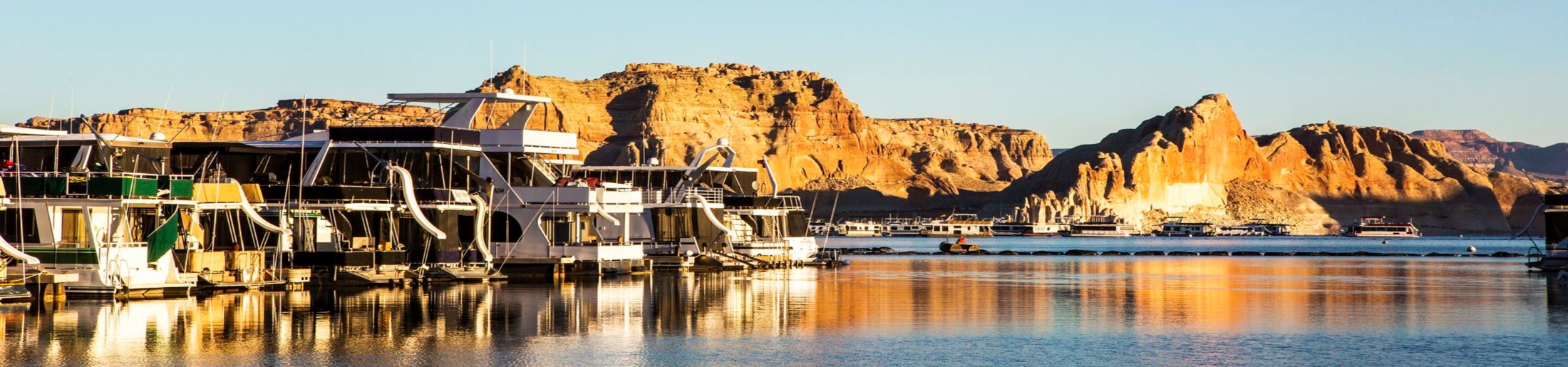
Boater Safety
Lake Powell Marinas - Boater Safety
A safe journey - is a happy journey.
The most important rule of boating is to plan ahead. When you’re better prepared, you’re safer. Know your boat, your abilities, the conditions, the abilities of your crew and guests, and understand Lake Powell’s rules and regulations before you leave port. Below is a basic list to guide you as you plan your boat trip.
Safety Rules
1. File a Float Plan
Before going out on the lake, leave a float plan with a relative, friend or your marina. A float plan should include a description of your boat, where you’re going, your route and expected return time. It should also include the name address and telephone number of each person on board, with an emergency contact. Notify the person who has your float plan when you return or if you decide to extend your time on the water.
2. Complete Pre-Departure Check List
Check the weather forecast for the area and time you will be on the water. Make sure steering and throttle controls work correctly. Check for any fuel leaks. Check engine compartment for oil leaks. Check all hoses for leaks, making sure hose clamps are tight. Drain all water from the engine compartment and make sure the bilge plug is replaced and secure. Check to see that you have a fully charged engine battery and fire extinguisher. Make sure you have the proper amount of life jackets, and that they are in good condition. Leave a float plan with a friend or relative.
3. Be a Safe Boater
Do not use alcohol or drugs while operating your vessel. Observe all speed and navigation rules.
4. Check Weather Conditions
Weather info is widely available and should be considered before departing the marina.
5. Have A Communication Plan
Boaters may communicate via marine band radio, cell phones, and visual aids. At Lake Powell National Park Service monitors marine channel 16 for emergency response. In remote areas communications may be unavailable. Cell phones will work in most open areas of Lake Powell.
6. Be Aware of Propeller Dangers
Remove keys when the boat is not moving. Make sure everyone is accounted for previous to engine start up. Never swim close to props when the engine is on.
7. Have Life Jackets
Children under 12 must wear a life jacket (a.k.a. personal floatation device – PFD) at ALL TIMES outside the boat cabin.
8. Be Aware of Carbon Monoxide Dangers
Carbon monoxide (CO) is a colorless, odorless, and tasteless gas that is slightly less dense than air. It is toxic to humans and animals when encountered in higher concentrations. It is critical that all crewmembers know where CO monitors are located, and how they operate. A responsible Captain has thorough knowledge of all boat safety systems. They should also know what to do if the alarms sound.
9. Be Alert to Fire Safety
All crewmembers need to know location of fire extinguishers, and how to use them. Aim at the base of the fire and use a sweeping motion. Crewmembers should also know where fire detectors are located and what to do if an alarm is sounded.
10. Know Anchors, Ropes, and Beaching Techniques
The time to correctly anchor your boat is before poor weather arrives. A correctly anchored boat can withstand most wind and storm events. Check with the marina staff if you are uncertain about correct beaching and anchoring techniques.
11. Be Safe On and Around the Dock
- Wear a personal flotation device (PFD) while on the docks and working around your boat. ESPECIALLY make sure that children are wearing properly fitted PFDs.
- Don't swim in marina waters. Boat maneuvering and movement is tough enough without having swimmers in the water, and there can also be dangerous stray currents in the water from improperly bonded electrical systems.
- Make sure you, your family members, and guests are wearing non-slip shoes anywhere on the marina premises, but especially around the docks and on your boat.
- Don't leave loose items lying around on the dock or in visible areas of your boat. They could get kicked into the water, stolen, or present a tripping hazard.
- Be proactive about regular maintenance of your vessel, especially electrical and fuel systems.
- Use biodegradable cleaning products when you wash your boat.
- If you leave your boat for any reason, turn off any portable heaters you may have on board.
- Never leave engine parts or oily rags around dock areas, and ventilate thoroughly before performing any work on your boat.
- You and your family are the eyes and ears of your marina neighborhood. Don't be shy about telling marina staff about potential problems or hazards, such as weatherworn wiring or fixtures, spilled or leaking fuel, or lack of safety equipment like fire extinguishers, proper signage, and life rings.
- On board gasoline generators can leak fuel, short out, overheat, and can represent a significant carbon monoxide risk if not properly used and maintained.
- Practice a safe egress from your boat and from the dock in the event of fire.
Safety Resources
It’s a good idea to review the resources below before beginning your trip. They’re essential for first-time boaters and an excellent refresher for experienced boaters.
- Safe Boating Video
- Safe Boating Courses
- Carbon Monoxide Information
- US Coast Guard Recreational Boater Resources
Safety Certificate Program
Houseboating Safety: http://www.lakepowell.com/houseboating/instructions-video.aspx
- Note: Only guests renting a houseboat from Lake Powell Resorts & Marinas are eligible for the fuel credit.
Powerboating Safety: http://www.lakepowell.com/stay/boating-safety/boating-safety-quiz.aspx
- Note: Only guests renting a power boat from Lake Powell Resorts & Marinas are eligible for the fuel credit.
Boat Registration | Boater Safety | Fuel Prices | Useful Links | Weather | Zebra-Quagga Mussels